
The best chat channel is the one your customers can and want to use when it matters. Web chat helps while they research your website. WhatsApp can support an ongoing customer relationship. A Telegram bot may suit a community already active there. None of these characteristics automatically makes one channel the winner.
For small businesses, the more important question is often: where can an issue be fully resolved without the customer telling the same story three times? Start with one properly supported channel and add a second when a concrete need becomes clear.
The comparison on one page
| Criterion | Web chat | WhatsApp Business Platform | Telegram bot |
|---|---|---|---|
| Getting started | In the browser; possible without a messenger account | WhatsApp account and a suitable way to make contact | Telegram account and starting the bot or an existing contact |
| Strongest use case | Questions while reading a service or product page | Continuing a case in an existing messenger conversation | Communicating with an audience already active there |
| Following up | Requires a suitable contact method or notification feature | Possible within sending, template and opt-in rules | After permitted contact is established; users can block the bot |
| Cost structure | Hosting, software, AI and maintenance | Also Meta message prices and possible provider markups | Standard bot messages generally have no Telegram charge; hosting, AI and special features are separate |
| Design freedom | Your own interface and workflow | Limited by the messenger and platform rules | Bot commands, buttons and optional additional bot features |
| Operational effort | Website integration, accessibility, spam protection and availability | Also accounts, templates, sending windows and quality status | Bot management, delivery, abuse protection and channel rules |
The table describes characteristics and planning choices, not measured market shares. Telegram's technical basics are covered in its bot introduction and bot FAQ. For WhatsApp, the Messaging Policy and pricing documentation are authoritative. Sources checked on 10 September 2026.
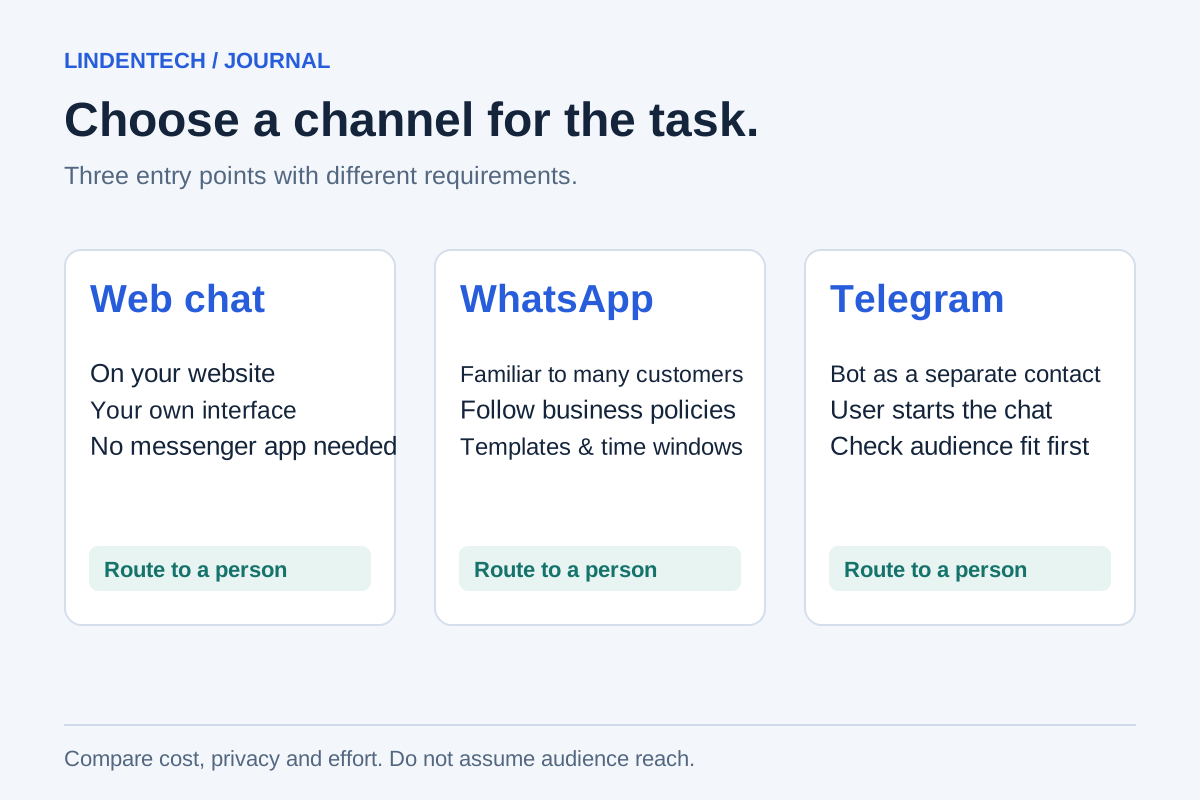
Three customer situations instead of three logos
Situation A: A prospective customer compares services on your website. Before making an enquiry, they want to know whether their project is a reasonable fit. Web chat can refer to the current page and link to relevant information. Moving to another app would add work here. A visible route to a person matters if the answer is not enough.
Situation B: A customer is waiting for an update about an ongoing order. Communicating in the WhatsApp conversation they already use can be convenient. This requires permission to follow up and reliable handling of incoming messages. The channel achieves little if messages are read immediately but never assigned to an employee.
Situation C: A specialist community already organises itself on Telegram. A bot can handle questions about an event, materials or the next appointment. Without that existing usage, Telegram is not an automatic success: the technical ease of starting a bot does not prove customer acceptance.
Reach in Germany: your own customers are the relevant sample
A large overall user count does not tell you how your particular audience wants to make contact. Distinguish having an account from actually wanting to communicate with a business through it. A messenger used privately may be unsuitable for professional or confidential matters.
For example, ask 20 to 30 existing customers which channels they prefer for initial questions, updates and documents. This small survey is not representative of Germany, but it provides a testable hypothesis for your business. Combine it with your existing contact patterns: where do enquiries arrive today, how long does the first useful answer take, and how often do customers need to chase a response?
A useful pilot then measures resolved issues, abandoned conversations, necessary handovers and staff time for each channel. Counting chat starts alone also rewards curiosity, misunderstandings and spam.
A “free messenger” does not mean free customer service
With web chat, you pay for software and operations directly or through a package. Model usage and human work are additional. According to Telegram's current bot FAQ, ordinary bot messages are generally free within the limits; accelerated bulk broadcasts can incur charges. Free API access replaces neither hosting nor a reliably staffed inbox.
WhatsApp requires distinctions between message types, recipient markets and dates. Meta has announced charges for service messages and utility templates within an open customer service window from 1 October 2026. The absence of fees for those replies before that date should therefore not be treated as a permanent cost advantage. Meta's own Business Agent platform also has separate token-based billing. Source: official announcement on non-template messages.
Compare the same task across every channel: for example, an enquiry with four replies, a knowledge search and an occasional human handover. Otherwise, you compare a complete service price with a bare delivery fee. A transparent AI cost calculation helps separate the components.
An app icon does not tell you how privacy is handled
Your own web chat can give you more control over data flows. Whether it is operated appropriately still depends on the actual services, purposes, access rights and retention periods involved. Hosting a web server in Europe does not make a connected model provider outside Europe disappear from the assessment.
For WhatsApp, consider the messenger, integration provider, AI service and your own team separately. Review the data processing terms applicable to your use and the contracts of other parties involved. Encrypted transport does not mean no processing takes place at the recipient's end.
Telegram distinguishes Cloud Chats from Secret Chats. An ordinary bot conversation is not equivalent to an end-to-end encrypted Secret Chat. The bot operator also processes the content sent to it. Telegram explains these differences in its encryption FAQ and privacy policy section on bots.
For sensitive documents, a separate secure upload within a customer portal may be more suitable. Let the chat explain the correct route instead of passing every document into the same message stream without assessment.
Multiple channels need shared case ownership
A customer starts on the website and follows up through WhatsApp. Without a shared case, two employees see only parts of the story. Define how handovers work, which information is transferred and who owns the case. A similar email address or matching display name is not enough to treat two identities as the same person automatically.
The assistant should pause when a person takes over. The team needs a brief summary, relevant sources and unresolved points. The customer must be able to tell whether an AI is responding or a person is taking over. These operational steps often matter more than adding another channel to the menu.
Making a clear starting decision
- Many first contacts happen on your website: first assess web chat on pages where customers have concrete questions.
- Customers want updates in their existing WhatsApp conversation: assess the Business Platform, including approvals, delivery rules and total costs.
- Your target audience demonstrably communicates on Telegram: test a limited bot use case with a named contact person.
- Nobody can reliably handle handovers: organise customer service before opening another inbox.
Our AI platform is one possible starting point for connected workflows. The customer situation, approvals and actual operating arrangements determine which channels make sense.